Wednesday, February 29, 2012

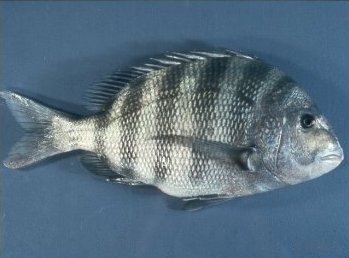
Sheepshead and Croakers

Some terms that you should be able to identify out of today's reading:
Calas, filé, Isleños, bycatch, diversion, MRGO

Here is a great article about fishing for Sheepshead. They are fearsome looking fish on the line! Here is an article about Atlantic Croaker.

The sheepshead (from WikiMedia)

Monday, February 27, 2012

Assignment 6: Farmer's Markets

We are now starting to shift our gaze in this class a little bit more toward the issues of food production and social justice as it relates to food.  This week you will be reading an excerpt from a recent book called Twain's Feast by Andrew Beahrs. The author of this book broke down a menu that Mark Twain assembled in the nineteenth century and tried to reconstruct it with foods that are available in modern day America. He found that it was a lot more difficult to replicate the foods that Twain knew 130 years ago than he first thought. The chapter that you will read comes from his investigation into some foods that Twain knew from New Orleans and Beahrs's efforts to locate them today. He makes a trip to the Crescent City Farmer's Market where he spoke to Clara Gerica about seafood. You can see a film made about Pete and Clara Gerica (as well as Ben Burkett) by one of my past freshman seminar classes below.


Your job will be to visit one of the city's numerous farmer's markets and to interview either a vendor or a customer to the market. You will combine your interview material with your own observations and compose a blog entry that engage the questions of why these markets are important and what role they play in sustaining traditional culture through food. Your blog entry must contain at least two quality photographs and directly quote at least one interview subject.

Some of the markets that you might visit include:
Crescent City Farmers' Market (Tuesday, Thursday, Saturday)
Hollygrove Market and Farm (Saturday)
The Freret Market (more of a monthly festival than farmer's market) Saturday, March 3. 
Sankofa Farmer's Market (Saturdays)
Our School at Blair Grocery (Weekends in the Lower 9)
There are other markets in Gretna and way out in St. Charles Parish at the German Coast Farmer's Market

One of my groups also did a film about Our School at Blair Grocery - See below:


Wednesday, February 15, 2012

Assignment 5: The Food of Mardi Gras Photo Essay

This assignment will encourage you to think visually. You will produce a photo essay using from five to seven images that conveys a message about the role of food and drink in the celebration of Mardi Gras. I encourage you to take many pictures and to use a real camera if at all possible. Ideally, you will take at least a hundred pictures and pick the very best ones for this essay.

Be creative: Mardi Gras food and drink traditions often take place away from the parade route, so keep your camera with you and keep your eyes open.

Post all of your images before we meet on the Monday after Mardi Gras Break. Each image should have a caption.

If you are not here for Mardi Gras, do an alternate essay based on the role of food in your break week.

Monday, February 13, 2012

Tips on Hot Links

One thing that a lot of you need to take a closer look at in your blogs is the power of hot linking. Think of the relationship between your blog and links as that between a tree's trunk and its branches. The purpose of hot links is to enrich and inform the reading experience by leveraging the power of the internet. Therefore, link the names of people, places, and things that you come across. If you are writing about corned beef or satsumas, then you should link them. If a food reminds you of a Guy on a Buffalo or Lady Gaga or John Besh, then link it.

Tuesday, February 7, 2012

Weekend Assignment: Discovering Memories through Interviews

Your assignment this week will involve interviewing someone about some deeper relationship involving food and memory. What sort of topic might you consider interviewing someone about? Maybe you would consider interviewing a parent or grandparent about their memories of something that their grandmother used to make. Perhaps you might ask a fellow Loyola student to describe a special holiday tradition celebrated by their family that involves food. The topic does not need to be about New Orleans, but it must involve you asking an interview subject to tell you about a memory they keep that involves food.

Assignment specifics: Record using some sort of recording device (iPhone, digital recorder, etc.) a 10 to 15-minute interview. Transcribe the interview by typing up an exact copy of what your interview subject says. (It takes about an hour to transcribe a ten minute interview.) If you do not have a phone that is capable of recording audio, you can check out an audio recorder from Media Services.

Take a photograph of the person you interview, and post it to the top of your entry. 

Then, using this transcript, you will assemble a blog post using ONLY what your interview subject says to tell a story of this memory.

This is a challenging assignment!

Think about the sorts of questions that you ask so that you ask them in a manner that encourages your interview subject to supply detailed answers. 

Ask questions that invite detailed description. For instance: "describe the scene at the dinner table." If someone mentions a person, ask "Tell me about the time that you two became friends."

IN addition to your blog post, I want you to hand in a copy of your interview's transcript.
Monday, February 6, 2012

Learning to Ask Good Questions

Today in class we will begin to explore how to ask good questions. You will all at some point need to interview someone about food culture, and I will increasingly expect you to incorporate such technique into your blog posts.

Good questions are the ones that invite your subject to share important details about what matters to them. A few things to think about when asking questions:

Avoid "yes/no" questions that elicit a one word response. Consider the difference in the following:

"Tell me about the first time you ever made gumbo." instead of "When did you first make gumbo?"

As questions that encourage your subject to be a storyteller.

At the same time, be a good listener. Ask follow-up questions. Encourage your subject to enrich their tale with descriptions of the people, places, and times that they relate.

Consider the following documentary. How much do we hear the interviewer?


"Gus" by Joe York.